

Treatment Center Zoning Requirements: How to Site a Behavioral Health Facility Without Losing a Year
Zoning stops more treatment programs than licensing does. A practical guide to siting rules, FHA protections, Oregon and Washington law, and site diligence.
Easton Hallock, Founder, Saint Health Group·August 17, 2026 · 14 min read · Last updated October 1, 2026
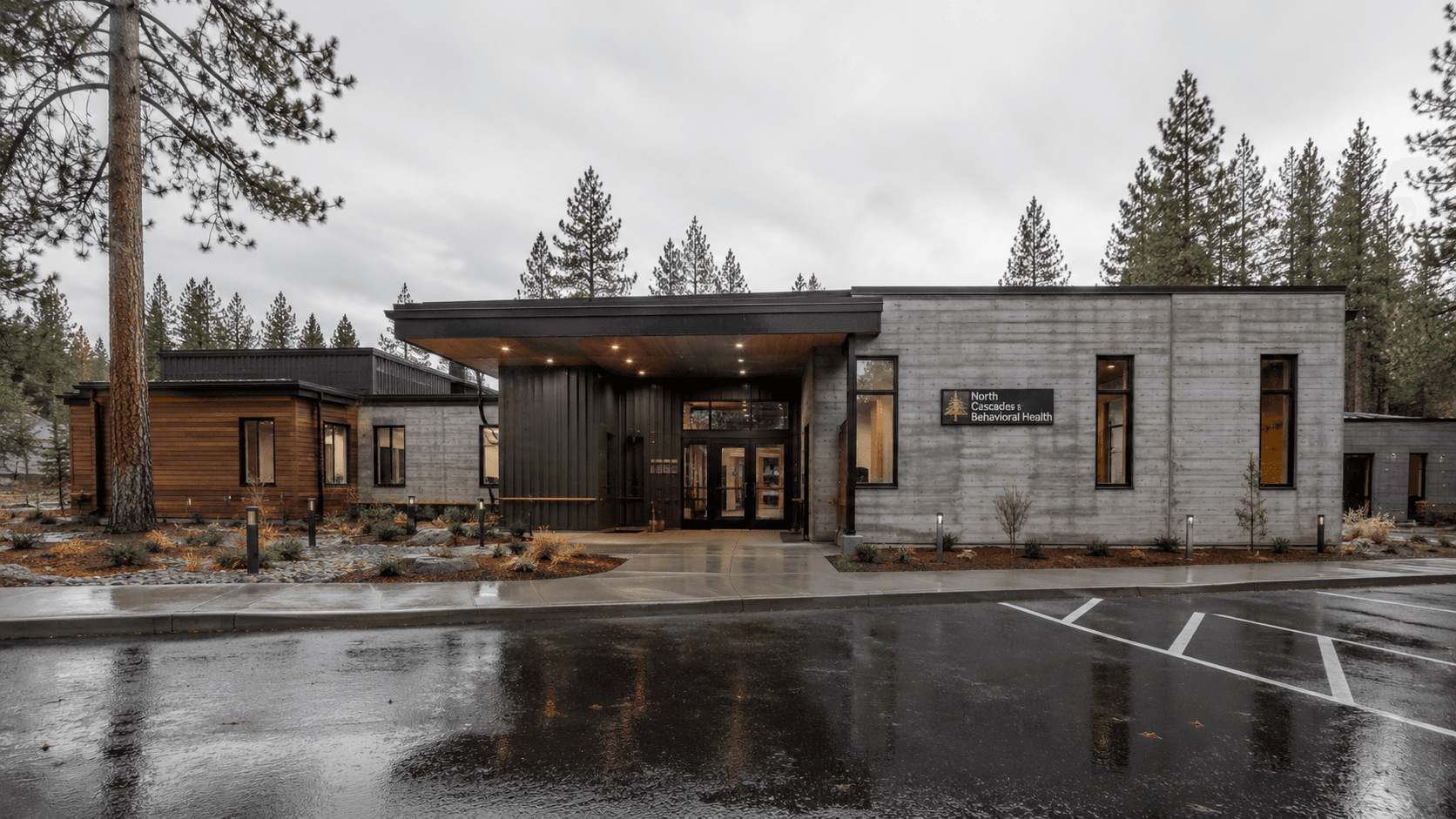
You can have your clinical model designed, your policies drafted, your medical director recruited, and your licensing application ninety percent complete, and still be a year from admitting a single client because you signed a lease on the wrong parcel. Zoning is the most underestimated dependency in a behavioral health facility launch. It is also the one operators discover last, usually after money is already committed.
The pattern is consistent. A founder finds a building that works clinically and financially, signs a lease or closes on a purchase, and only then learns that the local code classifies the intended use as something requiring a discretionary land use review, a public hearing, and a neighborhood comment period. What follows is six to eighteen months of hearings, continuances, appeals, and carrying costs on a building that cannot generate revenue. Some programs survive it. Some do not.
This guide covers what treatment center zoning requirements actually look like in practice, the federal protections that give operators real leverage, how Oregon and Washington differ from most states, and the diligence sequence that keeps a site from becoming a liability.
Why Zoning Stops More Programs Than Licensing Does
Licensing is a known quantity. The rules are published, the application is a document, and the timeline, while frustrating, is broadly predictable. State agencies are staffed by people whose job is to license programs, and they generally want qualified programs to open. Site selection sits early in the launch sequence we run through behavioral health startup consulting, because a lease signed before the zoning answer is the most expensive reversible mistake in a launch.
Land use is different in three ways that matter operationally.
- It is discretionary. Conditional use permits, special use permits, and variances are decided by planning commissions and hearings officers applying subjective criteria like neighborhood compatibility, and the outcome is not guaranteed by meeting a checklist.
- It is political. Land use hearings are public, neighbors have standing to testify and often to appeal, and elected or appointed decision-makers are responsive to constituents in a way state licensing staff are not.
- It is local. There is no single national standard. Two municipalities twenty minutes apart can treat the same twelve-bed residential program as a permitted residential use and as a prohibited institutional use.
The financial consequence is straightforward. Every month a site sits in land use review is a month of rent or debt service, insurance, utilities, and often payroll for a director you hired early, against zero revenue. On a mid-sized residential facility that carrying cost runs well into six figures over a contested review. This is a large share of why what it costs to open a treatment center in Oregon so often exceeds the founder's model.
The First Question: Is Your Facility a Dwelling or a Clinic?
Nearly every zoning outcome in behavioral health traces back to one classification question. Does your program constitute housing, or does it constitute a commercial or institutional service use? The answer determines which body of law protects you and which section of the local code applies.
Residential uses
Programs where clients live on site (residential treatment, recovery housing, sober living, transitional housing, and most residential withdrawal management) generally involve a dwelling. That single fact brings the federal Fair Housing Act into play, along with state siting statutes that were written specifically to keep local governments from excluding group living arrangements from residential neighborhoods. Residential classification is the stronger legal position for an operator, and it is worth understanding precisely why your program qualifies for it.
Clinical and commercial uses
Outpatient programs, PHP and IOP without a residential component, opioid treatment programs, and office-based practices are typically not dwellings. Local codes classify them variously as medical office, clinic, hospital, community service use, or in some codes a specifically defined and specifically disfavored category such as drug or alcohol treatment facility. Fair housing protections attached to dwellings do not apply in the same way, though the Americans with Disabilities Act still constrains how a public entity may treat a facility serving people with disabilities.
Many programs are mixed. A campus with residential beds and an outpatient clinic may be reviewed under two different use categories, and the more restrictive one usually governs the schedule. Identify this before you commit to a site, not during the application.
Federal Protections Operators Should Understand
Behavioral health operators are frequently treated by local jurisdictions as if they have no legal standing to object to hostile zoning treatment. That is wrong, and knowing why changes how a siting negotiation goes.
The Fair Housing Act
The Fair Housing Act prohibits discrimination in housing on the basis of disability. Individuals with a substance use disorder who are in recovery, and individuals with mental illness, are generally understood to be persons with disabilities protected by the Act. Importantly, the statute's definition of handicap excludes current illegal use of, or addiction to, a controlled substance, a distinction that matters for how a program describes its population and admission criteria, and one worth getting right with counsel rather than approximating.
The Department of Justice and the Department of Housing and Urban Development issued a joint statement in November 2016, State and Local Land Use Laws and Practices and the Application of the Fair Housing Act, that remains the clearest federal articulation of how these principles apply to zoning. Two points from it are consistently useful to operators.
- Neighbor opposition is not a lawful basis for denial. A jurisdiction may not block a group home or deny an accommodation because of neighbors' stereotypes, fears, or prejudices about people with disabilities.
- Facially neutral rules can still violate the Act. Spacing requirements, occupancy caps, and permit requirements applied to group homes but not to comparable dwellings can constitute discriminatory treatment even when the ordinance never names a protected class.
Federal enforcement in this area is active and ongoing. The Justice Department has repeatedly litigated and settled zoning cases involving recovery housing, and private plaintiffs have secured settlements requiring cities to rewrite zoning codes, adopt reasonable accommodation policies, and train staff.
Reasonable accommodation as a practical land use tool
The most useful and least used instrument available to a residential operator is the reasonable accommodation request. Rather than applying for a variance and arguing land use criteria, the operator asks the jurisdiction to modify a rule or policy as an accommodation necessary to give persons with disabilities equal opportunity to use and enjoy a dwelling.
Courts generally evaluate whether the requested accommodation is reasonable, whether it is necessary, and whether it affords equal opportunity. A jurisdiction may refuse only where granting it would impose an undue financial or administrative burden, or would fundamentally alter the nature of the zoning scheme. Filed properly, this puts the burden on the jurisdiction rather than the applicant and often resolves a siting problem without a contested hearing at all.
Oregon Siting Rules
Oregon gives operators more statutory protection than most states, and recent legislation expanded it considerably.
- Residential homes serving five or fewer. Under ORS 197.665, a residential home is a permitted use in any residential zone and in commercial zones that allow single-family dwellings, and a jurisdiction may not impose zoning requirements more restrictive than those applied to a single-family dwelling in the same zone. Note that residential home is a defined licensing category rather than any small program, and that staff are excluded from the resident count.
- Residential facilities serving six to fifteen. Under ORS 197.670(1)(b), a residential facility in this range may not be denied in a zone where multifamily residential uses are allowed unless the jurisdiction has adopted a siting procedure implementing ORS 197.667. Staff again do not count toward the resident total.
- House Bill 2005, Section 59 (2025). Local governments must allow residential treatment facilities and residential treatment homes on publicly owned property and on land zoned residential, commercial, employment, public lands, or qualifying industrial, without requiring a plan amendment, zone change, or conditional use permit, subject to carve-outs where service capacity is inadequate or hazard and natural resource protections apply. These approvals are expressly not land use decisions, sit outside the jurisdiction of the Land Use Board of Appeals, and carry a 120-day decision deadline.
- House Bill 2005, Section 60 is narrower than commonly described. It reaches crisis stabilization centers and mental or psychiatric hospitals only where the property is owned by a public body and is adjacent to a mental or psychiatric hospital that exists or is the subject of a pending development application. Do not plan a standalone crisis stabilization site around Section 60 without checking both conditions.
The practical effect is significant for operators in Bend, Eugene, Salem, and Portland. A residential program that would have required a conditional use permit and a contested hearing two years ago may now clear without a discretionary review at all; Portland, for example, processes these through a certification form. It also means local zoning codes are frequently out of date relative to state law, and planning counter staff may quote you a code provision that state statute has superseded. Verify against current statute, not just the municipal code. This interacts directly with the licensing pathway, since an Oregon Certificate of Approval is tied to a specific address and cannot be granted for a site the applicant does not lawfully control and occupy.
Washington Siting Rules
Washington approaches the problem through the Growth Management Act rather than a dedicated group-home statute.
- Essential public facilities. Under RCW 36.70A.200, no local comprehensive plan or development regulation may preclude the siting of essential public facilities, and each planning jurisdiction must include a process for identifying and siting them. The statutory list has been expanded to include opioid treatment programs, including mobile and fixed-site medication units, recovery residences, harm reduction programs other than safe injection sites, and inpatient facilities including substance use disorder treatment and mental health facilities.
- Cannot preclude does not mean cannot condition. Jurisdictions retain authority to apply reasonable siting processes and to require compatibility with the bulk, scale, and design standards of the underlying zone. The statutory test limiting conditions and costs to those reasonably necessary to mitigate adverse impacts applies to high-capacity transportation improvements, not behavioral health facilities, so what this protection prevents is exclusion rather than review.
- Adult family homes. RCW 70.128.140(2) makes an adult family home a residential use of property and a permitted use in all areas zoned for residential or commercial purposes, including single-family zones. The Washington Attorney General concluded in AGO 1992 No. 25 that state law preempts local spacing ordinances aimed at these homes, though that reasoning is specific to adult family homes and does not extend to other state-licensed residential care facilities.
For operators pursuing a behavioral health agency license in Seattle, Tacoma, Vancouver, or Spokane, the essential public facility designation is a meaningful lever, but it must be raised early and in writing, because it shapes which review track the jurisdiction assigns. Coordinate this with the licensing a behavioral health agency in Washington timeline so the two processes run in parallel rather than in sequence.
Both states limit how far local governments can restrict group living, but each rule reaches a different kind of facility.
| Siting rule | State | Facility covered | Local zoning treatment |
|---|---|---|---|
| ORS 197.665 | Oregon | Residential homes serving five or fewer | Permitted use in residential zones and commercial zones allowing single-family dwellings |
| ORS 197.670(1)(b) | Oregon | Residential facilities serving six to fifteen | Cannot be denied where multifamily uses are allowed, absent an ORS 197.667 siting procedure |
| HB 2005, Section 59 (2025) | Oregon | Residential treatment facilities and homes | Allowed on residential, commercial, employment, public or qualifying industrial land without a conditional use permit; 120-day decision deadline |
| HB 2005, Section 60 | Oregon | Crisis stabilization centers and psychiatric hospitals | Only on publicly owned property adjacent to an existing or pending psychiatric hospital |
| RCW 36.70A.200 | Washington | Opioid treatment programs, recovery residences, inpatient SUD and mental health facilities | Cannot be precluded as essential public facilities; siting review still applies |
| RCW 70.128.140(2) | Washington | Adult family homes | Permitted use in all residential or commercial zones, including single-family zones |
The Second Permit That Kills Timelines: Building Code and Fire
Operators who win the zoning fight frequently lose the same months to building code. Land use approval says the use is allowed on the parcel. It says nothing about whether the structure may lawfully be occupied for that use.
Under the International Building Code, occupancy classification drives everything downstream.
- Group R-4 covers supervised residential care. This classification generally applies to residential care and assisted living arrangements housing more than five and not more than sixteen occupants, and it carries requirements closer to residential construction.
- Group I-1 begins where R-4 ends. Above sixteen residents receiving custodial care, the building moves into the institutional group, with substantially heavier fire protection, construction type, and egress obligations.
- Group I-2 applies where occupants cannot self-preserve. This group covers facilities providing medical care on a twenty-four hour basis to more than five persons incapable of self-preservation, and detoxification facilities are expressly enumerated in it alongside hospitals and nursing homes.
- State amendments can override the base code. Washington, for example, classifies state-licensed residential treatment facilities as Group I-1 and adult family homes under the residential provisions, so the answer a local code official gives may differ from what an operator expects reading the model IBC.
Crossing a classification threshold can require automatic sprinkler systems, upgraded fire alarm and detection, revised egress paths, fire-rated separations, and structural work, a change order measured in hundreds of thousands of dollars on a building selected because the rent was attractive. Occupancy classification also interacts with state licensing rules and, if you intend to pursue it, with accreditation life safety standards. Determine your classification with a code consultant and the local fire marshal before the lease is signed, not after the contractor mobilizes.
A Site Diligence Sequence That Prevents This
The order matters more than the length of the list. Every item below should be resolved before a lease or purchase agreement goes unconditional.
- Define the use in code language. Write down exactly how your program should be classified under the local code, and what the fallback classification is if the planner disagrees.
- Confirm the zoning designation in writing. Request a zoning verification letter or pre-application conference and get the jurisdiction's position documented rather than relying on a counter conversation.
- Identify the review track and its true timeline. Determine whether the use is permitted outright, permitted with conditions, or subject to discretionary review, and ask the jurisdiction for realistic decision timelines including appeal windows.
- Check state preemption before accepting a local answer. In Oregon and Washington particularly, state statute may override the local code the planner is reading from.
- Resolve occupancy classification with the fire marshal. Get the code official's read on classification, sprinkler requirements, and egress before you own the problem.
- Verify parking, capacity, and licensing alignment. Confirm that the bed count or client capacity your license application will state is actually supportable under parking ratios, occupancy limits, and septic or sewer capacity.
- Negotiate contingencies into the real estate documents. Make the lease or purchase contingent on land use approval, building permit issuance, and licensure, with defined outside dates and a clean exit.
- Confirm the license can follow the address. Behavioral health licenses are site-specific. Confirm what a relocation or capacity change would require before you plan around growth at that address.
Handling Community Opposition
If your site requires a public hearing, assume organized opposition. The most effective operators treat this as a stakeholder campaign rather than a legal argument.
- Engage before you are on an agenda. Meet with the neighborhood association, adjacent property owners, and the district's elected official before notice goes out, when the conversation is still private and correctable.
- Bring operational specifics. Staffing ratios, twenty-four hour coverage, admission criteria, transportation plans, and a named point of contact answer the questions that actually drive opposition. Abstract reassurance does not.
- Build a record, not just an audience. Land use decisions are appealed on the record. Every factual submission, expert letter, and legal argument should be in writing and in the file, because what is not in the record generally cannot be argued on appeal.
- Keep the accommodation request separate and preserved. If a reasonable accommodation is warranted, file it explicitly and in writing rather than folding it into general testimony.
Frequently asked questions
Is a treatment center a dwelling or a clinic for zoning purposes?
Nearly every zoning outcome traces back to that one classification. Programs where clients live on site, including residential treatment, recovery housing, sober living, and most residential withdrawal management, generally involve a dwelling. That single fact brings the federal Fair Housing Act into play, along with state siting statutes written to stop local governments from excluding group living.
What building occupancy classification applies to a residential program?
Under the International Building Code, Group R-4 covers supervised residential care and generally applies to arrangements housing more than five and not more than sixteen occupants, carrying requirements closer to residential construction. Above sixteen residents receiving custodial care, the building moves into Group I-1 institutional classification, which costs materially more to satisfy.
Why do programs that win zoning approval still get delayed?
Because land use approval and building code are two separate permits. Zoning says the use is allowed on the parcel. It says nothing about whether the structure may lawfully be occupied for that use. Operators who win the land use fight frequently lose the same months to occupancy classification and fire code work.
Does the Fair Housing Act protect a residential treatment program?
It applies where the program constitutes housing rather than a commercial or institutional service use, which is why the dwelling versus clinic classification matters so much. That classification determines which body of law protects you and which section of the local code applies, so settle it before you spend money on a site.
What do Oregon and Washington siting rules actually do?
Both states limit how far local governments can restrict group living. Oregon's siting provisions sit at ORS 197.665, 197.667, and 197.670. Washington addresses essential public facilities at RCW 36.70A.200, with adult family homes at RCW 70.128.140. They constrain local discretion without eliminating it, so treat them as leverage rather than a guarantee.
When should site diligence happen?
Before you sign anything. Zoning classification, building occupancy, and fire requirements are all discoverable in advance and all far cheaper to resolve on paper than after a lease is executed. A site that fails classification after signing is among the most expensive mistakes available in a startup budget.
Get the Site Right Before You Get Everything Else Right
Zoning failures are expensive precisely because they happen after commitment. By the time a program is in front of a planning commission, the lease is signed, the capital is spent, and the operator's leverage is gone. Everything in this article is cheap to do in the sixty days before a site is committed and enormously expensive to fix afterward.
Saint Health Group does not stop at advice on this. We take facility launch end to end: evaluating and clearing sites before you commit, resolving zoning classification and preemption questions with the jurisdiction, coordinating occupancy classification with code officials and the fire marshal, preparing and filing land use and accommodation requests, running community engagement and hearing strategy, and then carrying the same site straight through licensing and accreditation infrastructure, writing the policies and procedures, implementing them across the program, training your staff, building the documentation and quality systems, and conducting a full on-site mock survey so you walk into the real one ready. One accountable partner from the parcel to the first admission.
If you are evaluating a site, negotiating a lease, or already stuck in a land use review, talk to us before the next deadline. And if you are earlier than that, start with the behavioral health startup infrastructure checklist and our operations and program development capabilities.
Ask about this article
Have a question this article did not answer? Send it to the team that wrote it and we will reply by email within two business days. Prefer to talk? 503-389-3239
Licensing, payer, and compliance intelligence for behavioral health operators. One email, most Tuesdays.
No spam. Unsubscribe any time.
More from The Journal
Back to The Journal →