

How Behavioral Health Providers Contract With Oregon CCOs
Oregon behavioral health providers clear two separate gates with every CCO they bill, credentialing and contracting, and CareOregon, Trillium, PacificSource, and Health Share each run them differently. Which CCO to approach first, what each packet requires, and the 2026 Lane County reassignment that is forcing rework right now.
Saint Health Group·September 8, 2026 · 10 min read
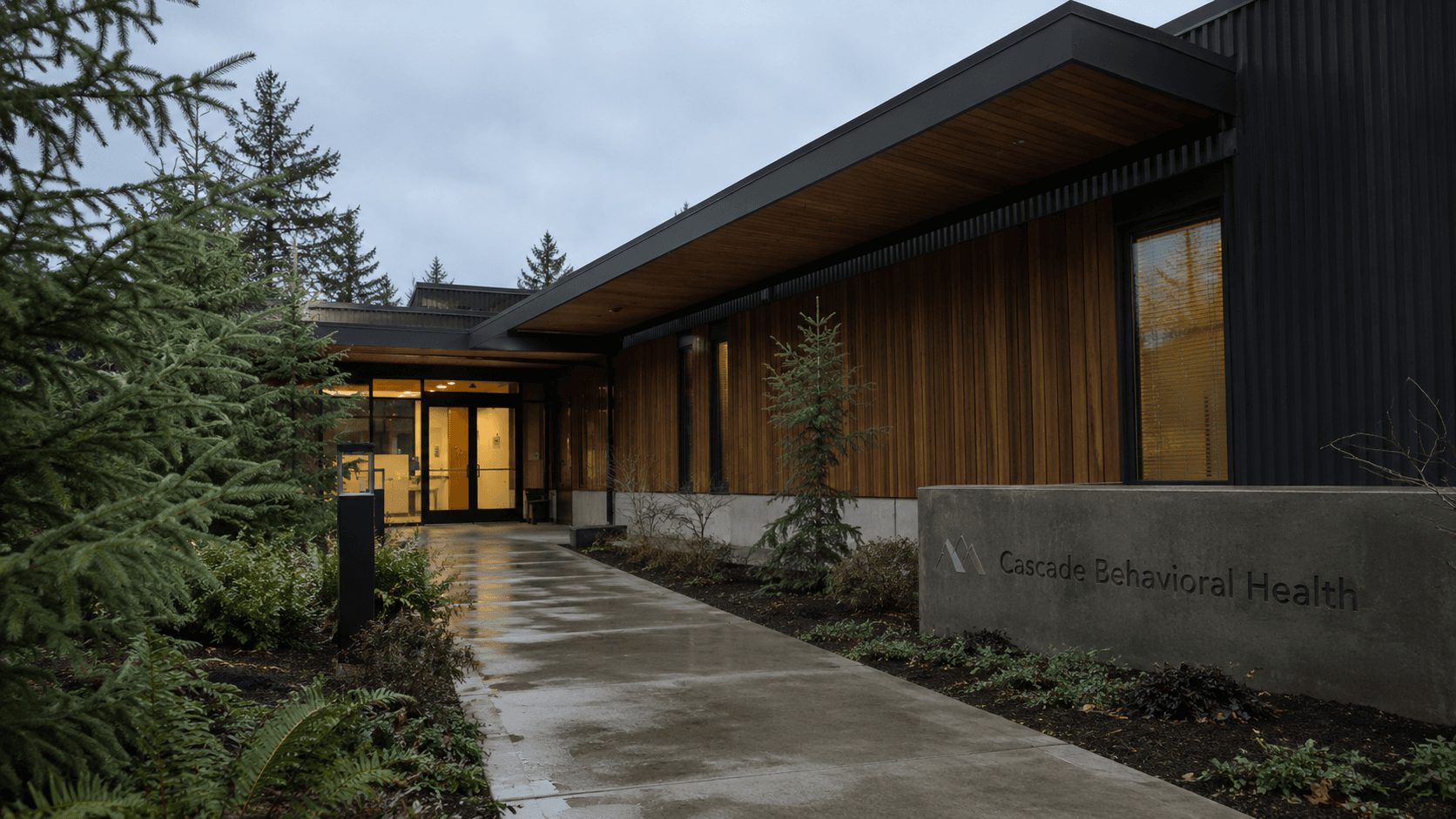
As of September 2026, Oregon behavioral health providers must clear two separate gates with each Coordinated Care Organization (CCO) they want to bill, credentialing and contracting, and four of the CCOs most behavioral health providers encounter (CareOregon, Trillium Community Health Plan, PacificSource Community Solutions, and Health Share of Oregon) run that process differently enough that treating them as interchangeable costs operators months. This is the playbook: which CCO to approach first, what each one actually requires, and the 2026 service-area change that is currently forcing providers in Lane County to redo work they thought was done.
What is actually different between CCO credentialing and CCO contracting?
Credentialing verifies that your organization and your clinicians meet a CCO's participation standards: active licensure, NPI, malpractice coverage, background checks, and (for behavioral health specifically) enrollment with the Oregon Health Authority. Contracting is the separate negotiation that sets your reimbursement rates, the codes and levels of care you are authorized to bill, and your effective date. A CCO can approve your credentialing file and still take weeks longer to execute the contract that lets you actually submit claims. Treating the two as one step is the most common reason operators miss their planned launch date. Our broader behavioral health insurance credentialing and payer contracting guide covers this distinction at the national level; this post goes CCO by CCO for Oregon specifically.
For a residential or higher-level-of-care program, there is a third gate underneath both: Oregon's Certificate of Approval (COA). No CCO will contract with an organization providing services that require a COA under OAR chapter 309, division 8, which certifies providers of the services described in division 19, until that COA is in hand. If your organization uses board-registered associates (CSWAs, MFTAs, LPCAs) to deliver Medicaid-billable services, that COA requirement is about to widen. See the COA section below.
Which Oregon CCO should you approach first?
Oregon's Medicaid behavioral health benefit runs through CCOs, and the right first call depends on where you are located and who you already touch:
| CCO | Coverage model | Credentialing timeline | Where to start |
|---|---|---|---|
| CareOregon | Direct CCO in the Portland metro; also manages Health Share's behavioral health network by delegation | Checklist-driven; submit to credentialing@careoregon.org | Credentialing checklist covering all provider types, with BH-specific routing (see below) |
| Health Share of Oregon | Coordinating entity for the Portland tri-county area; has delegated mental health and substance use network management to CareOregon since January 1, 2020 | Same as CareOregon; no separate Health Share BH credentialing track | Apply through CareOregon, not Health Share directly |
| Trillium Community Health Plan | Lane County and surrounding service areas | Trillium's network is open to CLSS-certified outpatient BH applications; other applications are considered where they address a clearly identified unmet need (see note below) | "Trillium Provider Interest Form," reviewed within 60 days |
| PacificSource Community Solutions | Multiple Oregon service areas outside the Portland metro and Lane County; also operates in Montana | 30 to 90 days from a complete application per PacificSource's own published timeline | State-specific interest packet, then credentialing application to ProviderContracting@PacificSource.com |
The practical takeaway: if you are in the Portland tri-county area, CareOregon's application covers both CareOregon and Health Share members in one packet. Do not submit a separate Health Share application, because there is not one. If you are anywhere PacificSource serves, its process is the most straightforward of the four. Trillium is the outlier right now; see below before you invest time in an application there.
A note on Trillium specifically: as of this writing, Trillium states that its "routine outpatient behavioral health network is generally meeting member needs across our lines of business," and it is "not routinely extending new contracts for outpatient behavioral health services" outside of that network. The one standing exception is providers certified in Culturally and Linguistically Specific Services (CLSS) by the Oregon Health Authority, whose applications continue to be reviewed individually. If you do not hold CLSS certification, confirm current network status with Trillium Provider Services (1-877-600-5472) before building a launch timeline around a Trillium contract, and know that you can still serve Trillium members as a non-participating provider by obtaining prior authorization for each case in the meantime, which is a materially different (and lower-margin) path than an in-network contract.
Do you need a Certificate of Approval before a CCO will contract with you?
For most higher-level-of-care programs, yes. No Oregon CCO will contract for services that legally require a COA until the COA is issued. That threshold is changing for outpatient practices that rely on board-registered associates: starting July 1, 2027, clinical social work associates, MFT associates, and professional counselor associates must be fully licensed or work for an organization holding an OHA-issued COA to keep billing Medicaid, ending the independent-billing allowance that has been in place since 2016. Federally Qualified Health Centers, Rural Health Clinics, Tribal Behavioral Health Clinics, and school-based health settings are exempt. Every practice that leans on registered associates needs a COA plan well before that date. Providers interested in obtaining a COA apply by emailing LCApplications@oha.oregon.gov. Our Oregon COA guide and our deep dive on the 2027 associate deadline cover the application process and exemptions in full.
What changed with Oregon's CCO service areas in 2026?
In early 2026, PacificSource Community Solutions exited Lane County as a CCO, and Trillium Community Health Plan took over that service area. Oregon Health Authority's own transition guidance is specific about what this means operationally: OHA directs providers to contact PacificSource about services approved or rendered through January 31, 2026; any prior authorization request submitted on or after February 1, 2026 routes to Trillium instead. Services through January 31, 2026 stay with PacificSource, and services from February 1, 2026 go to Trillium. Contact Trillium Provider Services to confirm participation requirements for those members. If your organization serves Lane County and has not confirmed its Trillium status, that is worth checking immediately. Members transferred automatically, but provider contracts did not. Confirm directly with Trillium Provider Services (1-877-600-5472) whether your practice can participate for members transitioning from PacificSource, given that Trillium's outpatient behavioral health network is otherwise largely closed to new contracts.
This is also a preview of a recurring operational risk: Oregon's CCO map is not static, and a practice built around one payer relationship can lose that relationship through a state-level reassignment it had no part in. Our behavioral health FAQ gives a short answer on how Oregon CCOs work for providers.
What does a CCO credentialing packet actually require?
CareOregon's published Initial Credentialing and Recredentialing checklist (updated September 2025) applies across provider types, but it names behavioral-health-specific routing explicitly and is a useful template for what any Oregon CCO will expect, even though the specific forms differ by plan:
- Current OPCA/OPRA application. Use the current version only, CareOregon explicitly rejects pre-2024 forms, with signature dates no more than 90 days old at submission.
- Attestation and attachment forms. Every question answered completely, with any "yes" response (and, on the current CareOregon form, certain "no" responses) explained in writing.
- Release of information. Scoped to name the specific health plan or "all contracted health plans," signed within the same 90-day window.
- Complete work history. Gaps explained, current employer marked as ongoing.
- DEA and board certification copies. Legible, current, and included when applicable to the clinician's role.
- Active malpractice coverage. A declarations or face sheet showing the provider's name and effective coverage dates.
- OHA Medicaid enrollment. Behavioral health clinicians billing on a CCO's behalf must independently be enrolled with the Oregon Health Authority; CCO credentialing does not substitute for this. CareOregon routes behavioral-health-specific updates to BHProviderDataUpdates@careoregon.org, separate from its general credentialing inbox.
Missing any one of these resets the review clock rather than just delaying it. CCOs return incomplete packets rather than following up item by item, so a single missing signature can cost two to three weeks. Once you are in-network, the next bottleneck is usually collections, not credentialing. See our guide to behavioral health revenue cycle collections for what typically breaks after the contract is signed.
How long does the whole process realistically take?
| Phase | Typical duration |
|---|---|
| Credentialing application preparation | 2 to 4 weeks |
| CCO credentialing review (CareOregon, Health Share, PacificSource) | 30 to 90 days (varies by CCO; PacificSource publishes this range explicitly) |
| Trillium network review | 60 days per Trillium's published turnaround, but only open to CLSS-certified outpatient BH applicants or continuity-of-care cases; confirm eligibility before applying |
| Contract negotiation and execution | Runs alongside or immediately after credentialing |
| OHA Medicaid enrollment (if not already active) | Should be initiated in parallel, not after |
| Realistic total, application to first billable claim | PacificSource publishes 30 to 90 days from a complete application. Other CCOs do not publish timelines, so ask each plan. Indefinite for Trillium outside an eligible category |
Multiply that by however many CCOs serve your service area if you plan to be in-network with more than one. The timelines do not compress by running them simultaneously, but starting them simultaneously instead of sequentially is exactly how you keep the total calendar time down.
Frequently asked questions
What's the difference between CCO credentialing and CCO contracting in Oregon?
Credentialing verifies your organization and clinicians meet a CCO's participation standards. Contracting is the separate negotiation that sets your reimbursement rates and effective billing date. Both are required, and completing one doesn't guarantee a fast timeline on the other.
Do I need to apply to Health Share of Oregon separately from CareOregon?
No. Health Share has delegated management of its mental health and substance use provider network to CareOregon since January 1, 2020. A CareOregon behavioral health credentialing application covers both.
What happened to PacificSource's Lane County CCO contract?
PacificSource exited as the CCO for Lane County in early 2026, with Trillium Community Health Plan taking over. OHA directs providers to contact PacificSource about services approved or rendered through January 31, 2026, and providers had to complete separate credentialing with Trillium to stay in-network for those members.
Do I need a Certificate of Approval before an Oregon CCO will contract with me?
For most residential and higher-level-of-care programs, yes. Starting July 1, 2027, that requirement also extends to outpatient practices that bill Medicaid using board-registered associates, unless the practice operates in an exempt setting such as an FQHC, Rural Health Clinic, Tribal Behavioral Health Clinic, or school-based health center.
How long does Oregon CCO credentialing take?
Most Oregon CCOs take 30 to 90 days for credentialing review alone, with contracting adding another two to six weeks. Budget three to five months from a complete application to your first billable claim with any single CCO.
Is Trillium currently accepting new behavioral health provider contracts?
Not routinely. Trillium states its outpatient behavioral health network is generally meeting member needs and that it is not routinely extending new contracts for outpatient behavioral health services. The exception is providers certified in Culturally and Linguistically Specific Services (CLSS) by the Oregon Health Authority, whose applications are still reviewed individually. Non-participating providers can still serve Trillium members case by case through prior authorization while a network slot isn't available.
One partner across every CCO relationship you need
Oregon's CCO landscape rewards operators who treat credentialing, contracting, COA compliance, and OHA Medicaid enrollment as one coordinated project rather than four separate to-do lists running on four different clocks, and who stay ahead of state-level changes like the 2026 Lane County reassignment instead of discovering them after a claim gets denied. Saint Health Group manages this as a single engagement: we build and submit clean credentialing packets the first time, negotiate the contract terms that actually move your reimbursement, sequence your COA application against your CCO timeline, and keep your payer relationships current as Oregon's CCO map keeps shifting. Talk to our payer contracting team about mapping every CCO in your service area against one timeline, see how we approach credentialing as part of the same engagement, or read our broader payer contracting for behavioral health guide for the rate-negotiation side of this work.
Ask about this article
Have a question this article did not answer? Send it to the team that wrote it and we will reply by email within two business days. Prefer to talk? 503-389-3239
One email a week, on Thursdays. Rule changes, payer policy and new guides for behavioral health operators.
No spam. Unsubscribe any time.
More from The Journal
Back to The Journal →